The People Behind the Move from Pilot to Scale
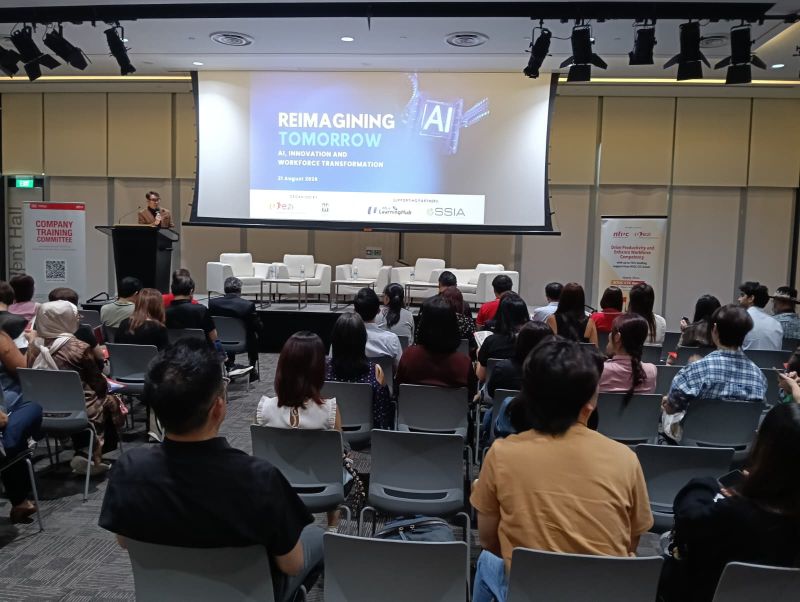
The move from an AI pilot to everyday manufacturing raises a workforce question as well as a technology question: how will engineers shape the systems they are expected to use? Innowave Tech brought that connection to Reimagining Tomorrow: AI, Innovation and Workforce Transformation, an event for business leaders, HR practitioners and technology innovators.
Speaking on Aug 21, 2026, Head of Solutions Mike Feng presented “From Pilot to Scale: Transforming Advanced Manufacturing with Industrial AI Agents”. The company’s account of the event identified three linked priorities: building the right technology, developing the right talent and solving real industrial challenges. Together, they place the people doing the work inside the deployment plan.
The keynote framing put engineers in the role of teaching and scaling industrial agents. Its stated aim was to free time for learning and higher-value work while keeping production authority with people. That makes engineering knowledge central to the proposed approach: people contribute the understanding of the work, and retain authority over production as the use of agents grows.
What Has to Travel Beyond the Pilot
A separate July reflection by CEO Xu Jinsong helps explain the wider scaling challenge. He identified heterogeneous operating environments, fragmented data, deployment capability, workforce adoption and the need for reliable solutions as barriers. This was an earlier discussion, distinct from the August workforce event, but it adds context to the question of what must be ready before AI can extend beyond its first use case.
Those barriers expose several different kinds of work. Fragmented data concerns the information available to a solution. Different operating environments concern where it must function. Deployment capability concerns getting it into use, while workforce adoption concerns how people will work with it. Treating them as one problem called “AI adoption” can obscure the separate decisions a manufacturer has to make.
The July account described Innowave Tech’s N–1–N pathway: bringing industry knowledge and proven use cases together into a repeatable deployment approach, then extending it across factories and applications. The accompanying framework connected data, agents and applications, and organisational knowledge. The emphasis is on establishing a foundation that can be reused, with industrial knowledge informing the route to scale.
A Shared Agenda for Engineering and Workforce Development
Read together, the two accounts suggest a practical agenda for manufacturing and HR leaders. Which engineering knowledge needs to inform the system? How will people learn to work with it? Who retains production authority? And what must be in place before the approach can be repeated elsewhere? Answering these questions makes the connection between deployment and workforce development concrete.
The workforce implication is specific: developing talent is part of preparing an AI deployment to grow. Innowave Tech’s contribution connected that preparation with the technical work of scaling agents, and with the ambition to give engineers more time for learning and higher-value work. A credible plan for scale needs to explain both how the technology will operate and how the people responsible for production will shape its use.